



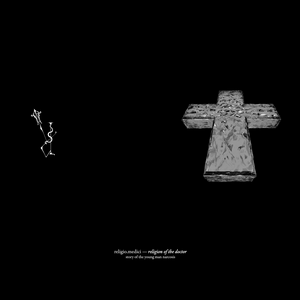

religion of the doctor
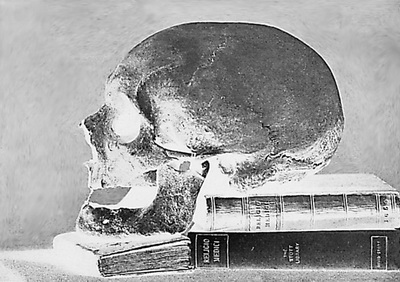
But then, unfortunately, we are not all made entirely of salt. We cannot breathe in these exalted regions for long. We have to admit that we have bodies as well as minds, and the books which cater for both and let one relieve the fatigues of the other are the books that have the longest lease of life. The soul may be exalted in Urn Burial; the body is refreshed in Religio Medici. There we can take our ease and trifle and laugh. There we can indulge in the delicious amusement of feeling, like some psychological spider, from phrase to phrase over the mind and person of Sir Thomas Browne. For the first to talk of himself broaches the subject with immense gusto. I am charitable; I am brave; I am averse from nothing; I am full of feeling for others; I am merciless upon myself; I know six languages, the names of all the constellations, and most of the plants of my country. "For my conversation, it is like the sun's, with all men, and with a friendly aspect to good and bad." ... We smile in the midst of the solemnities of Urn Burial when he remarks, "Afflictions induce callosities". The smile broadens to laughter as we mouth out the splendid pomposities, the astonishing conjectures, of Religio Medici. Yet it is from the crest of some grotesque flight of fancy that he launches himself upon one of those sentences which yawn like a chasm cut in the earth at our feet. "We carry with us the wonders we seek without us: there is all Africa and her prodigies in us."5 For the imagination which has gone such strange journeys among the dead is still exalted when it swings its lantern over the obscurities of the soul. He is in the dark to all the world; he has longed for death; there is a hell within him; who knows whether we may not be asleep in this world, and the conceits of life be but dreams? Steeped in such glooms, his imagination falls with a peculiar tenderness upon the common facts of human life. He turns it gradually upon the flowers and insects and grasses at his feet, so as to disturb nothing in the mysterious processes of their existence. There is a halo of wonder round everything that he sees. He that considers the thicket in the head of a teazle "in the house of the solitary maggot may find the Seraglio of Solomon".6 The tavern music, the Ave Mary bell, the broken urn that the workman has dug out of the field plunge him into the depths of wonder and lead him, as he stands fixed in amazement, to extraordinary flights of speculation as to what we are, where we go, and the meaning of all things. To read Sir Thomas Browne again is always to be filled with astonishment, to remember the surprises, the despondencies, the unlimited curiosities of youth.
— From Woolf's Essay "Sir Thomas Browne", a review of the Golden Cockerel edition of the Works of Sir Thomas Browne, published in Times Literary Supplement (1923)
But then, unfortunately, we are not all made entirely of salt. We cannot breathe in these exalted regions for long. We have to admit that we have bodies as well as minds, and the books which cater for both and let one relieve the fatigues of the other are the books that have the longest lease of life. The soul may be exalted in Urn Burial; the body is refreshed in Religio Medici. There we can take our ease and trifle and laugh. There we can indulge in the delicious amusement of feeling, like some psychological spider, from phrase to phrase over the mind and person of Sir Thomas Browne. For the first to talk of himself broaches the subject with immense gusto. I am charitable; I am brave; I am averse from nothing; I am full of feeling for others; I am merciless upon myself; I know six languages, the names of all the constellations, and most of the plants of my country. "For my conversation, it is like the sun's, with all men, and with a friendly aspect to good and bad." ... We smile in the midst of the solemnities of Urn Burial when he remarks, "Afflictions induce callosities". The smile broadens to laughter as we mouth out the splendid pomposities, the astonishing conjectures, of Religio Medici. Yet it is from the crest of some grotesque flight of fancy that he launches himself upon one of those sentences which yawn like a chasm cut in the earth at our feet. "We carry with us the wonders we seek without us: there is all Africa and her prodigies in us."5 For the imagination which has gone such strange journeys among the dead is still exalted when it swings its lantern over the obscurities of the soul. He is in the dark to all the world; he has longed for death; there is a hell within him; who knows whether we may not be asleep in this world, and the conceits of life be but dreams? Steeped in such glooms, his imagination falls with a peculiar tenderness upon the common facts of human life. He turns it gradually upon the flowers and insects and grasses at his feet, so as to disturb nothing in the mysterious processes of their existence. There is a halo of wonder round everything that he sees. He that considers the thicket in the head of a teazle "in the house of the solitary maggot may find the Seraglio of Solomon".6 The tavern music, the Ave Mary bell, the broken urn that the workman has dug out of the field plunge him into the depths of wonder and lead him, as he stands fixed in amazement, to extraordinary flights of speculation as to what we are, where we go, and the meaning of all things. To read Sir Thomas Browne again is always to be filled with astonishment, to remember the surprises, the despondencies, the unlimited curiosities of youth.
— From Woolf's Essay "Sir Thomas Browne", a review of the Golden Cockerel edition of the Works of Sir Thomas Browne, published in Times Literary Supplement (1923)
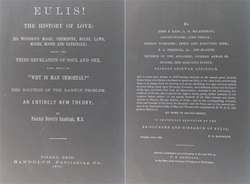
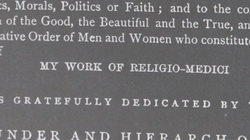
 Paschal Beverly Randolph wrote about Love & detailed that this was his solution to: "...every man, woman or child besides, whoever, as the named great, because Good Souls, ever did me a kindness or spoke me fairly in the dark hour, and through them to all human kind, for the firm and steady rebuilding of a right and true system of social ethics, based upon the purity of woman, the nobleness of man and the honor of the race, one wholly free from all abnormalism; devoted to the everlasting discomfiture of all who aim to pervert the higher, better, purer, nobler instincts of our common human nature; to the speedy downfall of all false systems and shams, whether in Physics, Morals, Politics or Faith; and to the corresponding advance, thrit and triumph of the Good, the Beautiful and the True, and to the assured sucess of the Superlative Order of Men and Women who constitue the E.W.A.S., this present Edition of MY WORK OF RELIGIO-MEDICI is gratefully dedicated by the RE-FOUNDER AND HIERARCH OF EULIS, Toledo, Ohio, 1874."